
The HD programme
We build the heavy duty version, and we stamp it.
Most equipment in this industry is specified to the calculated minimum, then used at the top of its range for years. It works until it does not, and the replacement is usually identical to the thing that failed.
Because we source direct from our manufacturing partners rather than reselling a fixed catalogue, a heavier build is a normal production request. Upsized chain, heavier forgings, matched grades throughout, and the whole assembly rated as a system. Proof-tested, permanently stamped and certified to that higher rating, so the paperwork describes what is actually on the truck.
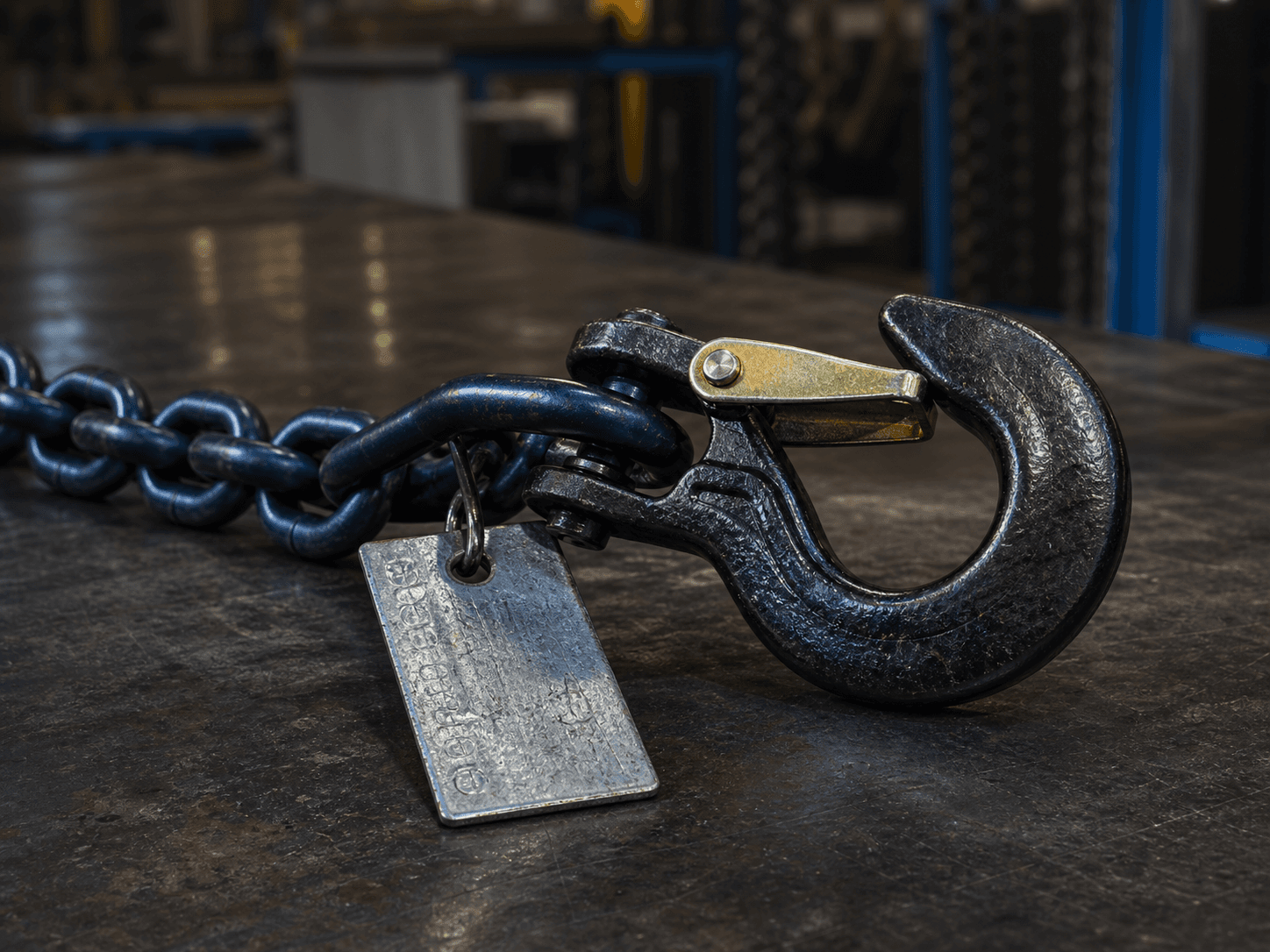
What changes in an HD build
Six things, all of them rateable
Heavy duty is a specification, not an adjective. Every item below is something a buyer can check on arrival.
Grade 100 alloy throughout
Not just the chain. Master links, connectors and hooks are matched in grade so the assembly is not quietly rated by its cheapest component.
Upsized fittings, rated as an assembly
Heavier throat sections and forged bodies, rated to the assembly rather than to the chain alone. Most failures are fittings, not chain.
Proof-tested to the HD rating
Lifting assemblies to twice their marked working load limit, hoists to the applicable multiple of rated load, below-the-hook devices to their design proof load.
Stamped, not stickered
Grade, working load limit and serial are stamped into steel. A season on a deck or in an excavation does not remove them.
Certificates that reference the serial
The certificate names the assembly it belongs to. If it is lost, we reissue it from the serial number.
Finish specified for the environment
Hot-dip galvanized for trench and wet service, corrosion-resistant coatings for winter road work, high-visibility finishes where equipment gets left behind.
How it works
From duty to stamp
- 01Specify the duty, not the part numberTell us what the assembly actually does: the loads, the angles, the cycles, and what failed last time. A part number describes what you bought before, which is often the thing that did not last.
- 02We size the upgradeGrade, chain size, fitting sections and master link geometry are chosen against that duty, and the assembly is rated as a system rather than as a chain with parts attached.
- 03Built, proof-tested and stamped to the HD ratingThe build is proof-tested to the standard that applies to it, then permanently stamped or tagged with the rating it was tested to. The stamp, the certificate and the equipment agree.
- 04Quoted beside the standard buildYou get both prices and both lead times on the same quote. Where the standard build is genuinely adequate we say so rather than selling up.
One line we will not blur
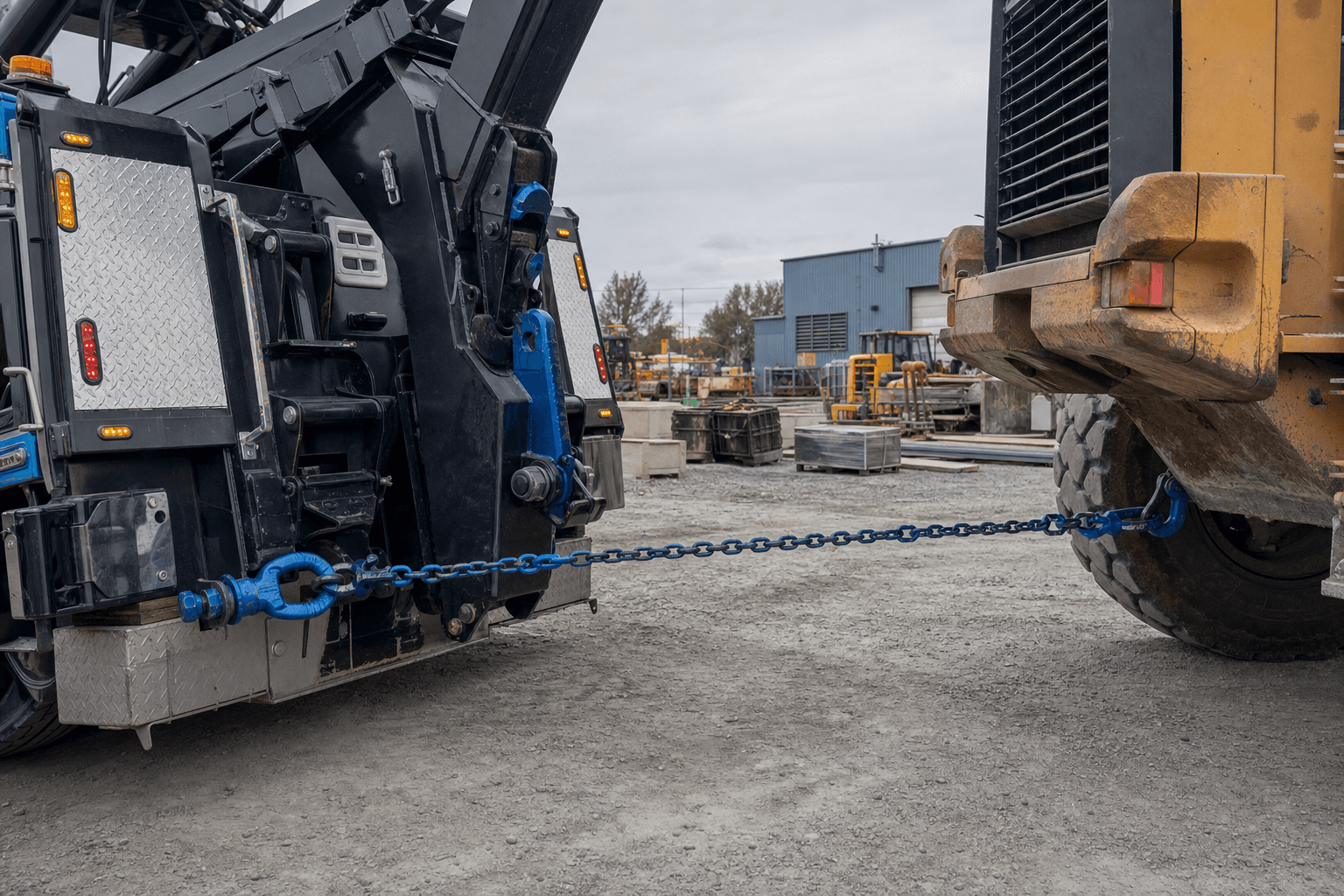
Grade 70 transport chain is rated for tie down and towing. It is not rated for overhead lifting, and a heavy duty finish does not change that. Where an assembly is going to lift, it is built as a Grade 100 alloy lifting assembly, proof-tested to twice its working load limit and tagged accordingly. We will tell you which one your application calls for.
Heavy duty only
Every heavy duty build we publish (4 lines)
Each of these is a separate specification with its own rating, stamped and certified to that rating. Filter the full catalogue to heavy duty at any time using the Build filter.
Hoisting Equipment
All hoisting equipment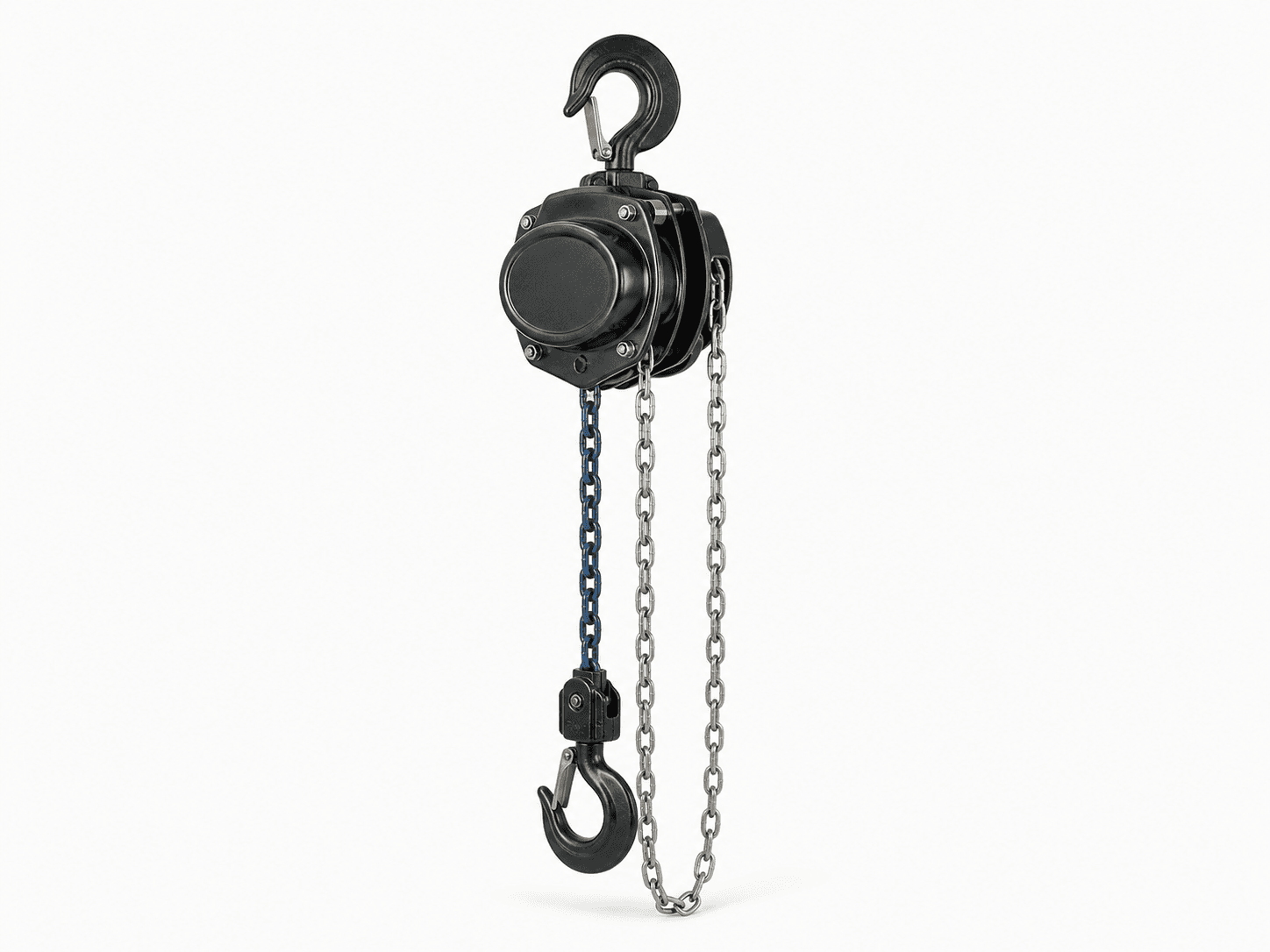
Heavy Duty Manual Chain Hoist, 1 Tonne
1 tonne hand chain hoist in the heavy duty build, Grade 100 load chain and upgraded brake friction, proof-tested, serial marked and certified.
Heavy Duty Manual Chain Hoist, 2 Tonne
2 tonne hand chain hoist in the heavy duty build, Grade 100 load chain and upgraded brake friction, proof-tested, serial marked and certified.
Heavy Duty Manual Chain Hoist, 3 Tonne
3 tonne hand chain hoist in the heavy duty build, Grade 100 load chain and upgraded brake friction, proof-tested, serial marked and certified.
Heavy Duty Manual Chain Hoist, 5 Tonne
5 tonne hand chain hoist in the heavy duty build, Grade 100 load chain and upgraded brake friction, proof-tested, serial marked and certified.
Where HD applies
Categories with heavy duty builds
Chain Slings & Assemblies
Single, double, triple and four-leg chain slings in 5/16", 3/8", 1/2" and 5/8" chain. Compare reach, standard and heavy duty builds, and documentation per SKU.
View productsHoisting Equipment
Chain hoists, lever hoists, beam clamps, trolleys and plate clamps. Proof-tested and certified per unit.
View productsFrequently asked questions
What does heavy duty actually mean on your products?
A defined, rated upgrade rather than a description. Depending on the category it means Grade 100 alloy in place of Grade 70 or 80, upsized forged fittings rated to the assembly, heavier hook sections, oversized master links, and a finish specified for the environment. The build is then proof-tested and permanently stamped to the higher rating.
Is an HD build certified differently?
It is certified to the rating it was built and tested to. The certificate references the assembly serial number, states the working load limit, and matches the stamp on the equipment. That agreement between stamp, certificate and equipment is the entire point.
How much more does heavy duty cost?
It varies by category and by how far the build is upsized. We quote the standard and heavy duty builds side by side on the same quote so the difference is visible rather than assumed, and we tell you where the standard build is genuinely adequate.
Can you build HD versions of assemblies we already run?
Yes, and this is the most common request. Send a photograph of the assembly and its tag, or the original specification, and we will quote a like-for-like standard build and a heavy duty equivalent.
Does heavy duty mean a longer lead time?
Usually the same, because HD builds come from the same production run planning as standard builds. Where a specific component needs a longer run, that is stated on the quote line rather than discovered later.
Which categories offer heavy duty builds?
Chain slings and hoisting equipment. In excavation and other severe-duty work we generally recommend the heavy duty build as the default, because the duty cycle is harsh and the cost difference is small against a failure.